
Polymaker
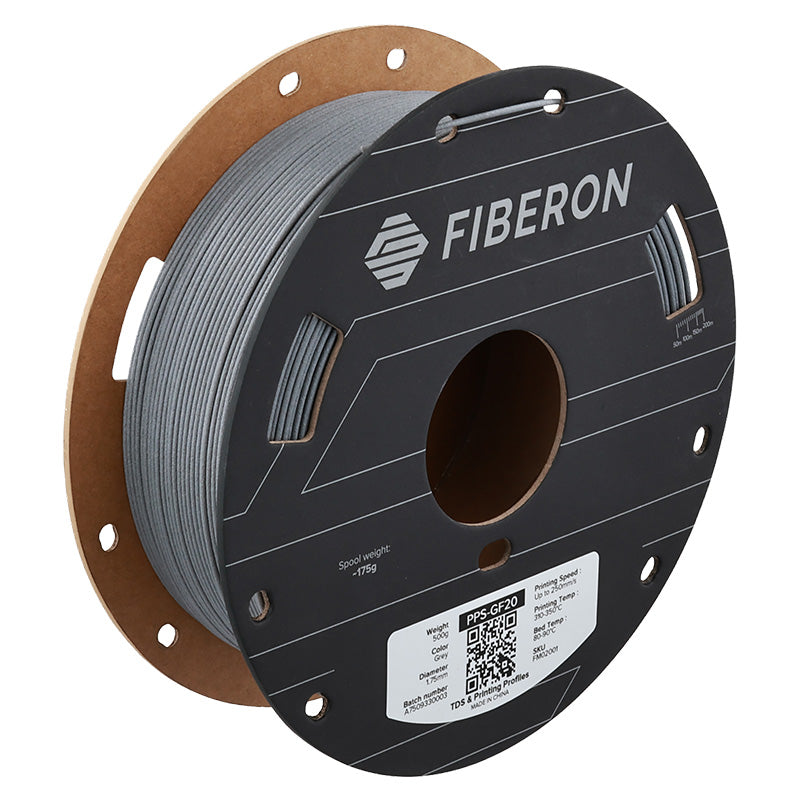
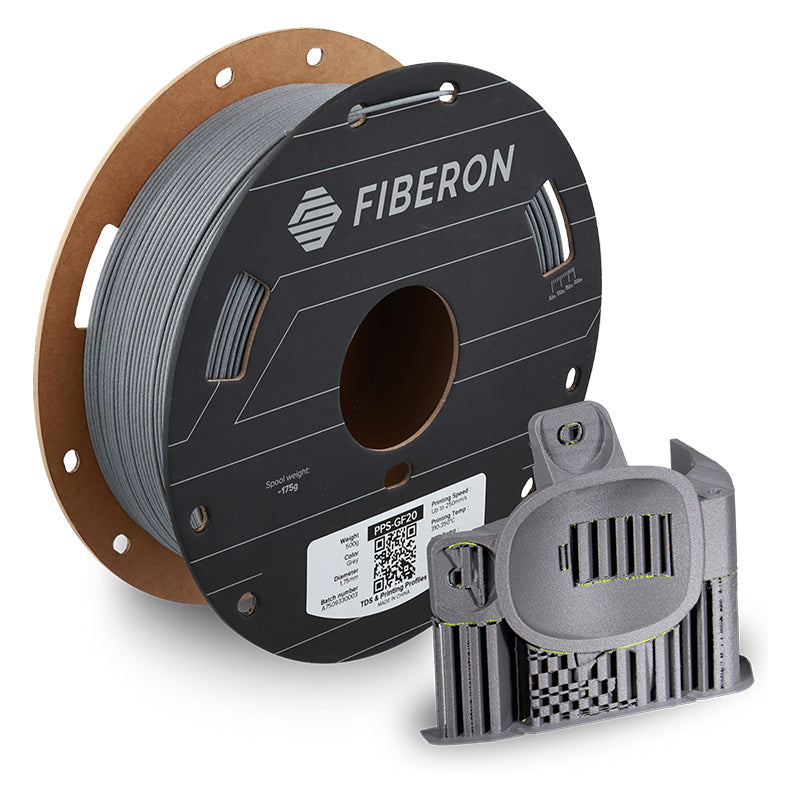
Fiberon PPS-GF20

We have 3 in stock.


Fiberon PPS-GF20
Grey / 500 g

EC3D Shop - Maarssen, Utrecht
Pickup Available - usually ready in 2 hours
Address:
Gagledijk 2, Unit B2
3602 AL, Maarssen, Utrecht
Contact details:
Telephone: +31 (0)6 2914 7428
Email: info@ec3d.nl
Trading Hours:
Monday - Friday: 09:00 - 17:00
Saturday & Public Holidays: 10:00 - 15:00
Sunday: Closed
Fiberon™ PPS-GF20: The Future of High-Performance 3D Printing
The newest addition to the Polymaker Fiberon™ family, PPS-GF20, is a high-performance filament engineered for industrial-grade applications and extreme environments. This advanced material is based on Polyphenylene Sulfide (PPS) and is reinforced with 20% glass fiber, offering a unique combination of exceptional properties that were once exclusive to expensive, specialized machinery.
Whether you're in the automotive, aerospace, or electronics industries, PPS-GF20 delivers the reliability and performance you need to create functional, durable, and mission-critical parts.
Key Features:
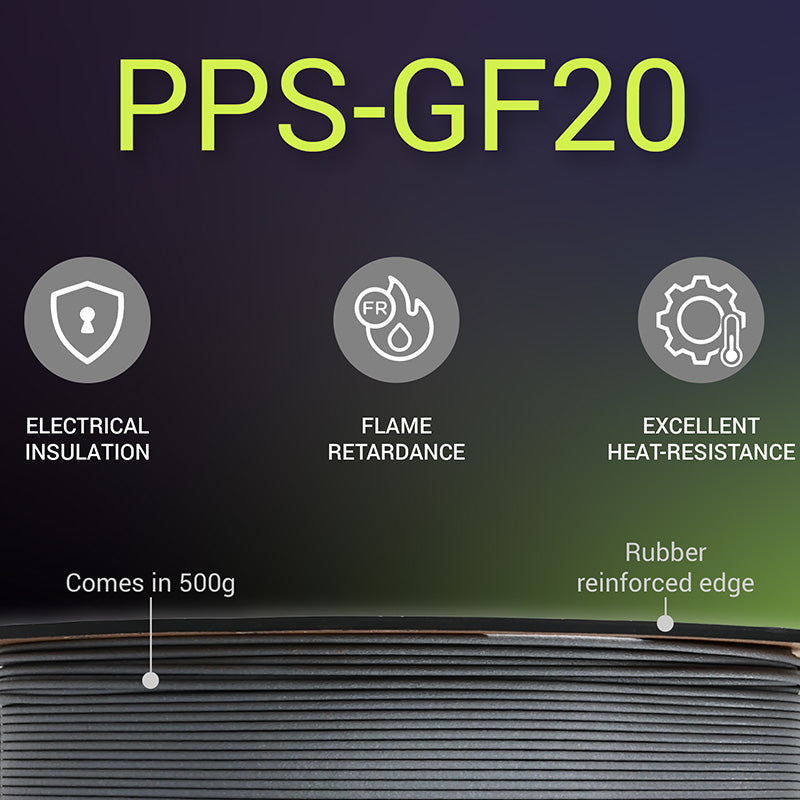
- Exceptional Thermal Resistance: With a Heat Deflection Temperature (HDT) of up to 236.3°C (at 0.45 MPa after annealing), PPS-GF20 is built to withstand extreme heat, making it perfect for under-the-hood automotive parts, high-temperature fixtures, and components for hot-air equipment.
- Superior Mechanical Strength: The 20% glass fiber reinforcement provides incredible strength and stiffness, with a Young's modulus of up to 4552 MPa and a bending strength of 102 MPa. This makes it ideal for structural brackets, mounts, and other parts that require robust performance under mechanical load.
- Electrically Insulative & Flame Retardant: Unlike carbon fiber composites, PPS-GF20 uses glass fibers, making it an excellent electrical insulator. It offers a dielectric strength of 6.05 kV/mm and a UL94 V0 flame retardant rating at 1.5mm, perfect for electronic housings, sensor enclosures, and components in sensitive electrical systems.
- Unrivaled Chemical Resistance: PPS-GF20 is highly resistant to a wide range of chemicals, including acids, bases, oils, and solvents. This makes it a trusted material for parts used in chemical labs, factory floors, and other harsh industrial settings.
- Low Moisture Absorption & Excellent Dimensional Stability: The filament has an extremely low moisture absorption rate, ensuring reliable and consistent print quality even in humid environments. It also exhibits minimal warping, maintaining excellent dimensional accuracy for your most precise parts.
Recommended Printing Settings:
- Nozzle Temperature: 310 - 350°C
- Bed Temperature: 80 - 90°C
- Chamber Temperature: Room temperature (heated chamber not required but can be beneficial)
- Printing Speed: Up to 250mm/s
- Cooling Fan: OFF (to maintain heat and improve layer adhesion)
- Nozzle Type: A wear-resistant nozzle, such as hardened steel or ruby, is highly recommended due to the abrasiveness of the glass fibers. Avoid using brass nozzles.
- Drying: Dry at 100°C for 10 hours before printing.
- Annealing: For optimal thermal and mechanical properties, anneal the printed part at 130°C for 10 hours. This process improves the isotropy and overall performance of the material.
Together, Layer by Layer!